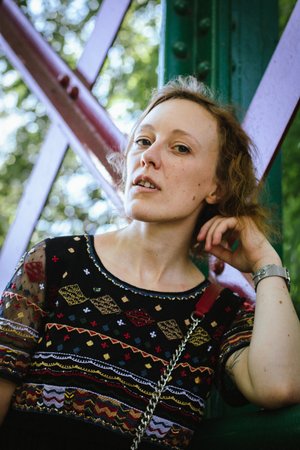
Emma Ruth Rundle: “The record is meant to be an anti-fascist record”
🇬🇧 english version below - 🇫🇷 version française plus bas
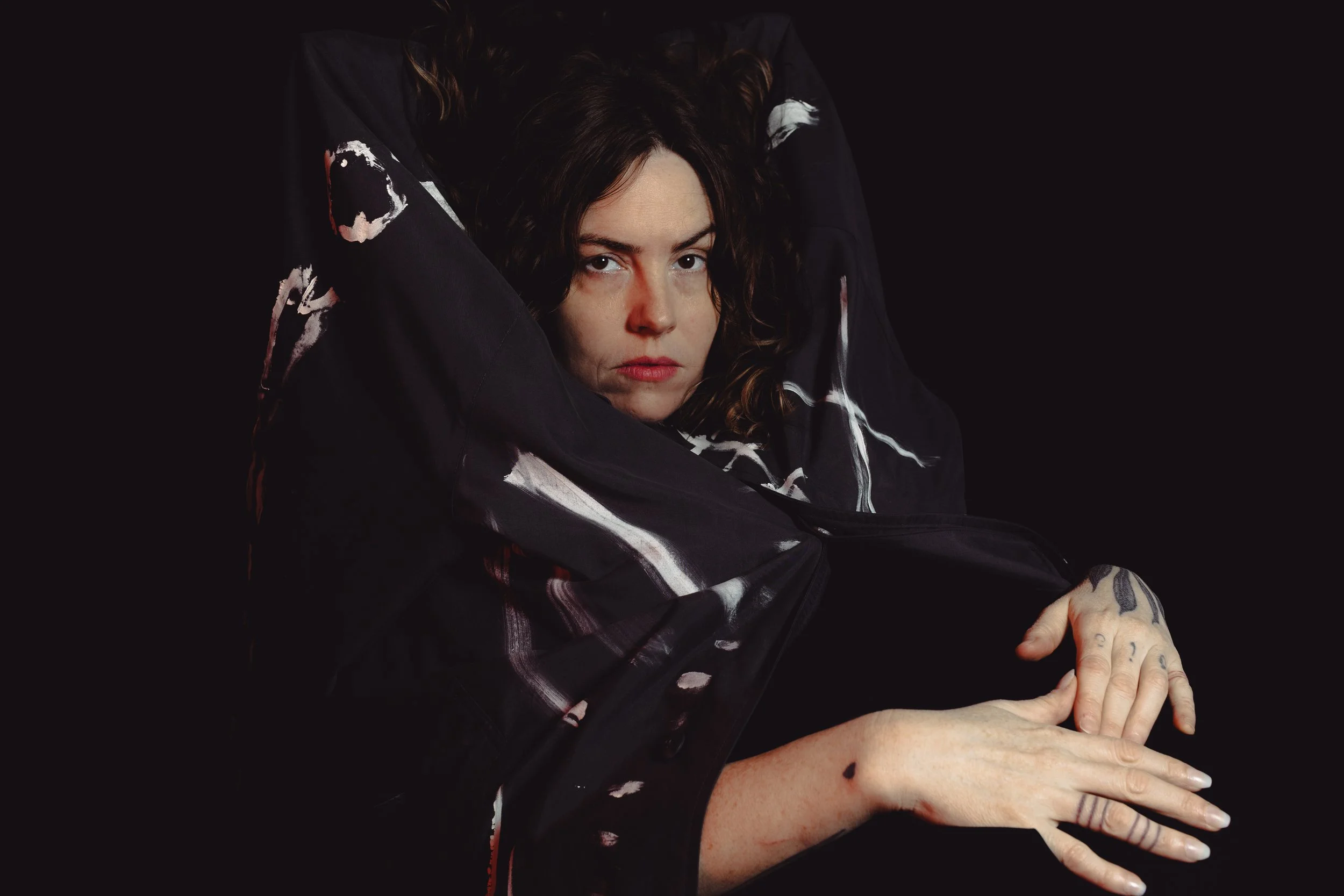
© Kristin Cofer
Five years after Engine of Hell, Emma Ruth Rundle returns with a full-band record, These Killing Times, out September 18 on her own label, Errant Child.
The American singer-songwriter, painter and multidisciplinary artist turns her attention to political anger, the climate crisis and the state of the world, calling it her most political record to date. But These Killing Times isn't defined by anger alone. Emma Ruth Rundle leaves room for hope, and the possibility of building something better.
I spoke with Emma Ruth Rundle about the making of These Killing Times, the importance of friendship, the role of art, the crows in her backyard, cinema and punk rock.
Your new album is called These Killing Times. What are the “killing times” you're writing about? Would you say it's also your most political record?
Emma Ruth Rundle: I feel like it's evident that we're living in a moment of global crisis, from humanitarian and human rights issues to the climate crisis and everything else that's going on.
Some of the songs are more specifically focused, for me, on my feelings around American politics. But I think what's happening here is the rise of the far right. The record is meant to be an anti-fascist record at its core.
And yes, it's definitely my most political record. Most of my records are autobiographical or improvisational, or have more to do with mythologies or environments. This record is less introspective and more reactionary.
We're living in a time where the political climate and the climate crisis are affecting every single person. So it is a personal experience.
What made you feel like you needed to write about what's happening in the world?
Emma Ruth Rundle: At first, I felt that continuing in the way that I have in the past, writing about very personal experiences, maybe would be a little bit self-indulgent or irresponsible at this time.
My focus has been taken over by what we can't deny any longer that's happening. Right now, I just came back from being away and there were so many fires there. I couldn't go outside for a few days because of the smoke, and people's houses were burning down. And I know it's happening in France too, and everywhere.
Every day, this is what we face, and we have to think about what we want to do about it.
After the intimacy of Engine of Hell, how did it feel to step back into a full-band record?
Emma Ruth Rundle: It felt good. I wanted to be with other people right now. I want to be with other people musically and in my daily life. On tour, I want to have comrades and colleagues around, people that we're working on something together with.
I felt nervous at first because I've been out of practice playing with a band. Playing solo, you can change how the music is every day. You can play the song differently.
I don't know how it will be touring, but I'm very happy with how it's been going so far, and really excited about all the musicianship I got to have featured on my album with all the guests.
“I wanted to be with other people right now.”
A lot of the musicians on the record are people you've known and worked with for years. Was it important to be surrounded by people you trust?
Emma Ruth Rundle: Most of the people that played on the record are friends of mine. Troy, who played bass, we've been in many bands together and we've known each other for over 20 years.
Jess is a friend. Some of the people I've collaborated with before, like Bryan [Funck] from Thou, he sings in the background on a song. Lucas, who's Storefront Church, and I have toured. Patrick, who plays on the record on a few songs, and I are friends and have collaborated and toured together.
So there's a lot of friends and people that I know on the record.
Friendship is everything. Even in this time, it's important to have friends.
Enough carries a lot of anger, but also feels surprisingly hopeful. Was it important for you to leave room for hope?
Emma Ruth Rundle: Enough is really about these men who think they can own the world. You know the song The Man Who Sold the World, the David Bowie song? There's a lot of anger, but hope is an important feeling to have on the record because I need hope.
I tend to get into despair and depression a lot, so I know that other people probably feel that way too. Having some hopeful moments was an important thing to do for this record.
If we don't have any hope, I don't think we'll feel that there's any chance to do something different. And I worry about that in myself. If I don't believe that there is a way forward, that I will give up.
“If I don't believe that there is a way forward, I will give up.”
At the end of the record, you leave the listener with a question about what we should live for. What does that question mean to you personally?
Emma Ruth Rundle: At the end of the record, the last song ends with a question, which is: “What should we live for beyond the valley of the fear, beyond the valley of the shadow of the fear of all men?”
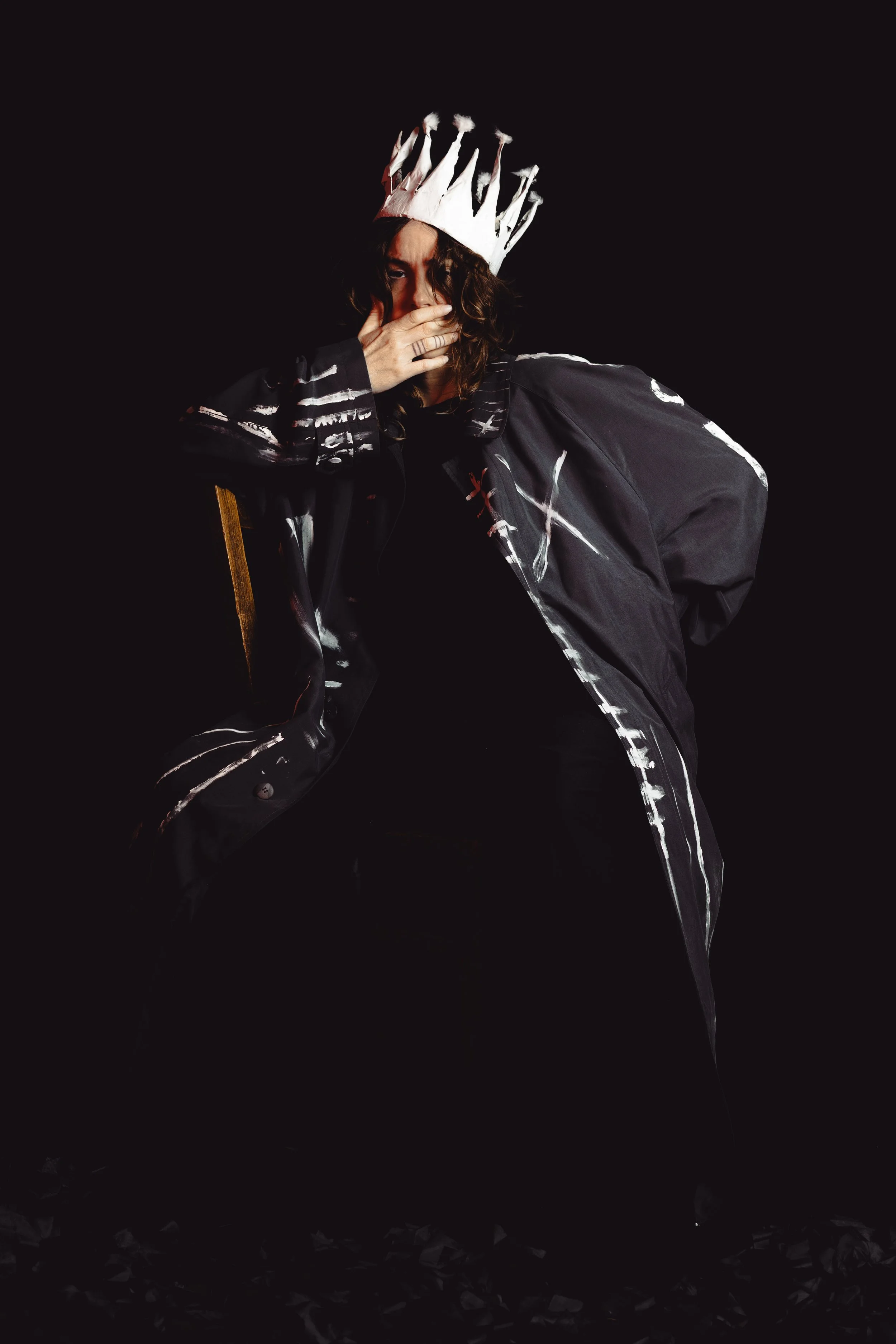
© Kristin Cofer
So I think it asks about the human condition and asks the listener to engage in thinking about this question: what do we want life on Earth to be like? What should we live for?
For me personally, outside of music and art, I feel a deep connection to animals. In my backyard, I have these crows that visit me every day. They come every morning and they sit there.
The longer I spend here with these crows, the more I think about how maybe there was a version of humanity that was a steward of the Earth, living in harmony and taking care of the world and other people.
I know it sounds kind of naive, but for me, in my private moments, it's things like that that I live for. I don't think I have an answer to the grander question. I hope someone else will answer it for me.
You're a musician, a painter and you're involved in creating your own visuals. Do some songs begin as images before they become music?
Emma Ruth Rundle: Sometimes. I love to look at images and think about them, and how the emotion of some images or environments can be translated into music.
I do paint. I'm working on some paintings right now. I'm working on this kind of awful series of horrible paintings about what I think the fabric of society is truly made of: power, greed and exploitation and all these other things.
I'm always kind of making things.
If These Killing Times were a film rather than an album, which director would you trust to make it?
Emma Ruth Rundle: For my last record, I would have chosen Wim Wenders to do that one. I love his films. He's really good at cultivating a specific tone that's existential and reflective and also a little bit nostalgic, and it's dealing with time and place.
But for this one, maybe I would choose Adam Curtis, the documentarian. He did HyperNormalisation. I really like his documentaries. He cuts up BBC footage and creates these really interesting collages.
I think [These Killing Times] would need to be a documentary.
“My most rock'n'roll thing is my past. My most punk rock thing is my present.”
What's the most rock'n'roll thing about you?
Emma Ruth Rundle: Probably my past. I had some very rock'n'roll years, but maybe now I think I could consider myself more punk rock than rock'n'roll.
I think rock'n'roll is a lot about a lifestyle, and punk rock is more about an ethos, maybe anarchist punk rock, kind of thing.
Maybe intersectional feminist punk rock.
So I guess that's my answer: my most rock'n'roll thing is my past. My most punk rock thing is my present.
Are you already thinking about what you want to make next?
Emma Ruth Rundle: No, I'm still working on this record.
We're still building the world of this record and working on all the things, because I released this on my own little label. And then when I do some creative stuff, it's mostly silly things like making masks or painting.
But I'll probably start writing again. I'd really like to make more music that's improvisational or for a specific purpose, like an environment or a situation.
Someone came to me at a show and talked about playing some of my music for her dying patients. And I thought, “Oh no, I don't know that the music I've been making is something that I would want to listen to while I was dying, or subject a dying person to.”
But then it made me think about: do we have any music that's, like, purposed for dying?
I think it would be cool to write music for that purpose. Things like that.
But I don't really have the space to do that right now.
A conversation that allowed me to discover a little more of Emma Ruth Rundle’s world beyond her music - and that’s also what I love about interviews: the little digressions, the unexpected topics and the details that make each conversation unique.
Thank you, Emma, for your time and for this chat. I really loved getting to talk with you. And to you, dear reader: I hope These Killing Times finds its way to you too!
These Killing Times is out September 18 via Errant Child.
🇫🇷 version française
⬇️ retrouvez la version française de l’interview ci-dessous ⬇️
Emma Ruth Rundle : “Cet album se veut être un album antifasciste”
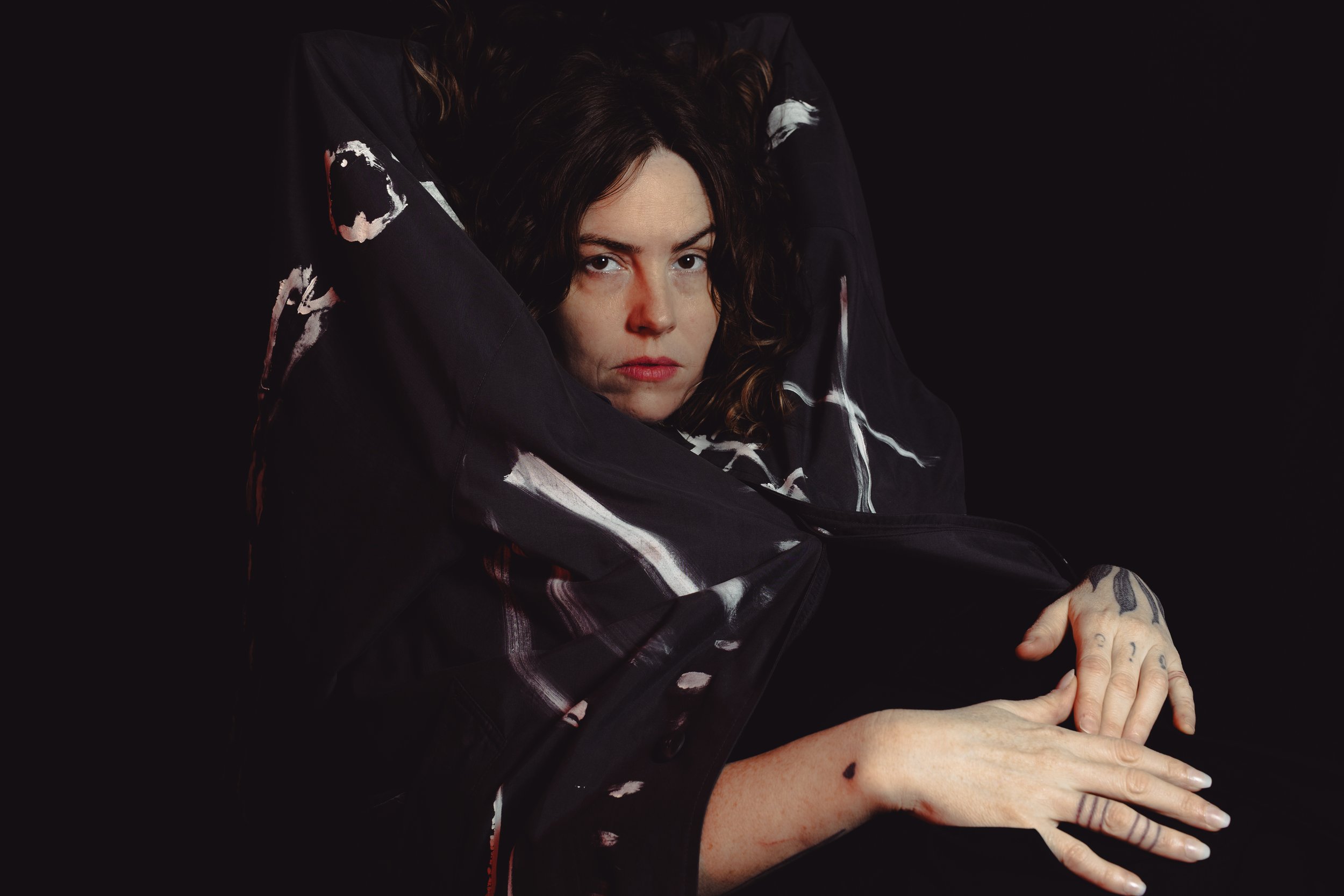
© Kristin Cofer
Cinq ans après Engine of Hell, Emma Ruth Rundle revient avec These Killing Times, qui sortira le 18 septembre sur son propre label, Errant Child.
L'autrice-compositrice-interprète, peintre et artiste pluridisciplinaire américaine s'intéresse à la colère politique, à la crise climatique et à l'état du monde, décrivant ce disque comme son album le plus politique à ce jour. Mais These Killing Times ne se résume pas à la colère. Emma Ruth Rundle laisse aussi une place à l'espoir, à l'amitié, à la communauté et à la possibilité de construire quelque chose de meilleur.
J'ai échangé avec Emma Ruth Rundle autour de la création de These Killing Times, de l'importance de l'amitié, de la place de l'art, des corbeaux qui viennent lui rendre visite, de cinéma, de punk rock et de ce pour quoi nous choisissons de vivre.
Ton nouvel album s'appelle These Killing Times. De quels “killing times” parles-tu ? Et est-ce ton disque le plus politique ?
Emma Ruth Rundle : Je pense qu'il est évident que nous vivons une période de crise mondiale, qu'il s'agisse des questions humanitaires et des droits humains, de la crise climatique ou, plus largement, de tout ce qui se passe actuellement dans le monde.
Certains morceaux se concentrent plus particulièrement sur ce que je ressens face à la politique américaine. Mais je pense que ce qui est en train de se passer, c'est la montée de l'extrême droite. Le disque est, au fond, un disque antifasciste.
Et oui, c'est définitivement mon album le plus politique. La plupart de mes disques sont autobiographiques ou improvisés, ou ont davantage à voir avec des mythologies ou des environnements. Celui-ci est moins introspectif et davantage dans la réaction.
Nous vivons à une époque où le climat politique et la crise climatique affectent absolument tout le monde. C'est donc aussi une expérience personnelle.
Qu'est-ce qui t'a donné le sentiment que tu devais écrire sur ce qui se passe dans le monde ?
Emma Ruth Rundle : Au début, je me suis demandé si continuer à écrire sur des expériences très personnelles n'était pas un peu nombriliste, voire irresponsable, dans le contexte actuel.
Mon attention a été accaparée par ce qu’on peut plus nier. Je viens de rentrer d'un voyage et il y avait tellement d'incendies. Je ne pouvais pas sortir pendant plusieurs jours à cause de la fumée, et des maisons brûlaient. Je sais que ça se passe aussi en France et partout ailleurs.
C'est ce à quoi on est confronté.e.s tous les jours, et on doit réfléchir à ce qu’on veut faire face à tout ça.
Après l'intimité d'Engine of Hell, comment as-tu vécu le fait de revenir à un groupe ?
Emma Ruth Rundle : Ça m'a fait du bien. J'avais envie d'être avec d'autres personnes, d'être entourée, aussi bien dans ma vie musicale que dans ma vie quotidienne. En tournée, j'ai envie d'avoir des camarades et des collègues autour de moi, de travailler ensemble sur quelque chose.
J'étais nerveuse, au début, parce que ça faisait longtemps que je n'avais pas joué avec un groupe. Quand on joue seule, on peut changer la manière dont on interprète la musique chaque soir. On peut jouer le morceau différemment.
Je ne sais pas encore ce que ça donnera en tournée, mais je suis très contente de la manière dont les choses se passent jusqu'ici, et vraiment ravie de tous les musicien.ne.s qui ont participé à l'album.
« J'avais envie d'être avec d'autres personnes. »
Beaucoup de musicien.ne.s présents sur le disque sont des personnes avec lesquelles tu travailles ou que tu connais depuis des années. Était-ce important pour toi d'être entourée de personnes en qui t’avais confiance ?
Emma Ruth Rundle : La plupart des gens qui ont joué sur le disque sont des ami.e.s. Troy, qui joue de la basse, et moi avons joué dans plusieurs groupes ensemble et nous nous connaissons depuis plus de vingt ans.
Jess est une amie. J'avais déjà collaboré avec certains d'entre eux, comme Bryan [Funck] de Thou, qui chante en arrière-plan sur un morceau. Lucas, de Storefront Church, et moi avons été en tournée ensemble. Patrick, qui joue sur plusieurs morceaux, est aussi un ami avec qui j'ai collaboré et tourné.
Il y a donc beaucoup d'ami.e.s et de personnes que je connais sur ce disque.
L'amitié, c'est tout ce qui compte. Dans une période comme celle-ci, c'est important d'avoir des amis.
Enough porte beaucoup de colère, mais aussi une vraie forme d’optimisme. Était-ce important pour toi de laisser une place à l'espoir sur le disque ?
Emma Ruth Rundle : Enough parle vraiment de ces hommes qui pensent pouvoir posséder le monde. Tu connais la chanson The Man Who Sold the World de David Bowie ? Il y a beaucoup de colère, mais l'espoir est un sentiment important à avoir sur ce disque, j'en ai besoin.
J'ai tendance à beaucoup sombrer dans le désespoir et la dépression, donc je sais que d'autres personnes ressentent probablement la même chose. Il était important pour moi d'avoir des moments d'espoir sur ce disque.
Si nous n'avons aucun espoir, je ne pense pas que nous puissions avoir le sentiment qu'il est possible de faire les choses autrement. Et ça m'inquiète pour moi-même : si je ne crois pas qu'il existe une voie possible, je vais finir par abandonner.
“Si je ne crois pas qu'il existe une voie possible, je vais finir par abandonner”
À la fin du disque, tu laisses l'auditeur.ice avec une question sur ce pour quoi nous devrions vivre. Qu'est-ce que cette question signifie pour toi, personnellement ?
Emma Ruth Rundle : À la fin du disque, le dernier morceau se termine par une question : “What should we live for beyond the valley of the fear, beyond the valley of the shadow of the fear of all men?” (“Pour quoi devrions-nous vivre, au-delà de la vallée de la peur, au-delà de la vallée de l'ombre de la peur de tous les hommes ?”).
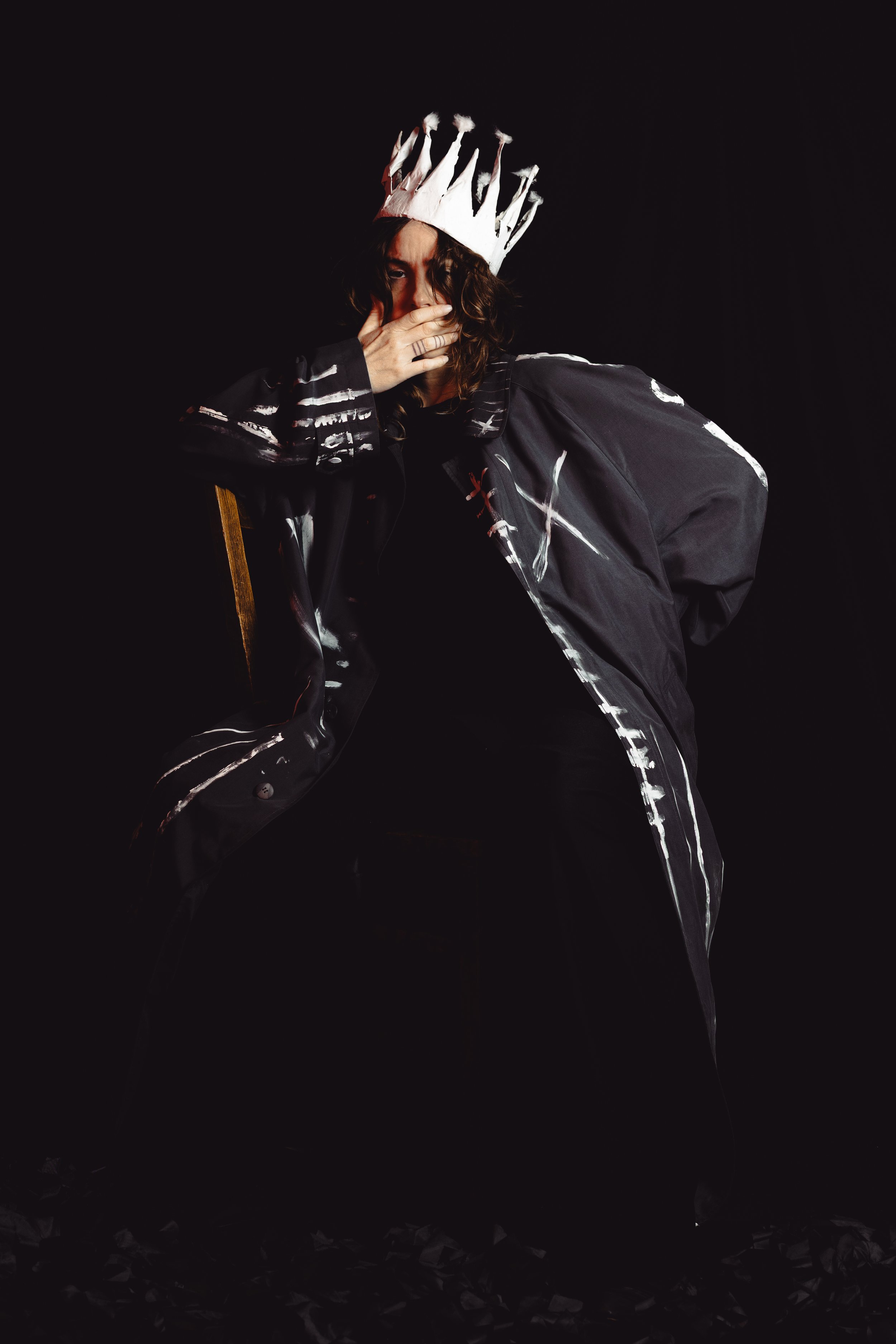
© Kristin Cofer
Je pense que cette question interroge la condition humaine et invite l'auditeur à réfléchir à ce que nous voulons que la vie sur Terre soit. Pour quoi voulons-nous vivre ?
Pour moi, personnellement, en dehors de la musique et de l'art, je ressens un lien très fort avec les animaux. Dans mon jardin, j'ai des corbeaux qui viennent me rendre visite tous les jours. Ils viennent tous les matins et se posent là.
Plus je passe du temps avec ces corbeaux, plus je me dis qu'il a peut-être existé une version de l'humanité qui était gardienne de la Terre, qui vivait en harmonie avec elle et prenait soin du monde et des autres.
Je sais que ça peut sembler un peu naïf, mais ce sont des choses comme ça qui me donnent envie de vivre. Je ne pense pas avoir de réponse à cette question plus vaste. Peut-être que quelqu'un d'autre pourra y répondre pour moi.
Tu es musicienne, peintre et tu participes aussi à la création de tes propres visuels. Est-ce que certains morceaux commencent par des images avant de devenir de la musique ?
Emma Ruth Rundle : Parfois. J'aime regarder des images et réfléchir à la manière dont l'émotion qu'elles dégagent, ou celle de certains environnements, peut être traduite en musique.
Je peins toujours. Je travaille actuellement sur quelques tableaux, dont une série assez horrible autour de ce qui, selon moi, constitue réellement le tissu de notre société : le pouvoir, la cupidité, l'exploitation et toutes ces choses.
Je suis toujours en train de fabriquer ou de créer quelque chose.
Si These Killing Times était un film plutôt qu'un album, à quel réalisateur confierais-tu sa réalisation ?
Emma Ruth Rundle : Pour mon précédent disque, j'aurais choisi Wim Wenders. J'adore ses films. Il est très doué pour créer une atmosphère particulière, à la fois existentielle, contemplative et un peu nostalgique, tout en accordant une vraie importance au temps et aux lieux.
Mais pour celui-ci, peut-être que je choisirais le documentariste Adam Curtis. Il a réalisé HyperNormalisation. J'aime vraiment beaucoup ses documentaires. Il utilise des images d'archives de la BBC et crée des collages vraiment intéressants.
Je pense que [These Killing Times] serait un documentaire.
“Ce que j’ai de plus rock’n’roll, c’est mon passé. Ce que j’ai de plus punk rock, c’est mon présent.”
Quel est le truc le plus rock'n'roll chez toi ?
Emma Ruth Rundle : Probablement mon passé. J'ai eu des années très rock'n'roll, mais aujourd'hui, je pense que je me considère davantage comme punk rock que rock'n'roll.
Je pense que le rock'n'roll est beaucoup lié à un mode de vie, tandis que le punk rock relève davantage d'une philosophie, peut-être une sorte de punk rock anarchiste.
Peut-être même du punk rock féministe intersectionnel.
Donc je dirais que ce que j’ai de plus rock’n’roll, c’est mon passé. Ce que j’ai de plus punk rock, c’est mon présent.
Est-ce que tu réfléchis déjà à ce que tu aimerais créer ensuite ?
Emma Ruth Rundle : Non, je travaille encore sur ce disque.
Nous sommes encore en train de construire l'univers de cet album et de travailler sur toutes les choses liées à sa sortie, puisque je le publie sur mon propre petit label. Et quand je fais quelque chose de créatif, ce sont surtout des choses un peu idiotes, comme fabriquer des masques ou peindre.
Mais je recommencerai probablement à écrire. J'aimerais beaucoup faire davantage de musique improvisée ou créée pour un usage spécifique, pour un environnement ou une situation particulière.
Quelqu'un est venu me voir après un concert et m'a parlé de faire écouter ma musique à ses patient.e.s en fin de vie. Et je me suis dit : “Oh non, je ne sais pas si la musique que je fais actuellement est quelque chose que j'aurais envie d'écouter alors que je suis en train de mourir, ou que j'imposerais à quelqu'un qui est en train de mourir”.
Mais ça m'a fait réfléchir : est-ce qu'il existe de la musique conçue spécifiquement pour accompagner la fin de vie ? Je pense que ce serait intéressant de créer de la musique dans ce but. Des choses comme ça.
Mais je n'ai pas vraiment le temps ni l'espace pour m'y consacrer pour le moment.
Une conversation qui m'aura permis de découvrir un peu plus l'univers d'Emma Ruth Rundle, au-delà de sa musique - et c'est aussi ce que j'aime dans les interviews : les petites digressions, les sujets auxquels on ne s'attend pas et les détails qui rendent chaque conversation unique.
Merci Emma pour ton temps et pour cette discussion. J'ai vraiment adoré pouvoir échanger avec toi. Et à vous qui me lisez : j'espère fort que vous prendrez le temps de découvrir These Killing Times à sa sortie.
L'album These Killing Times sortira le 18 septembre chez Errant Child.